

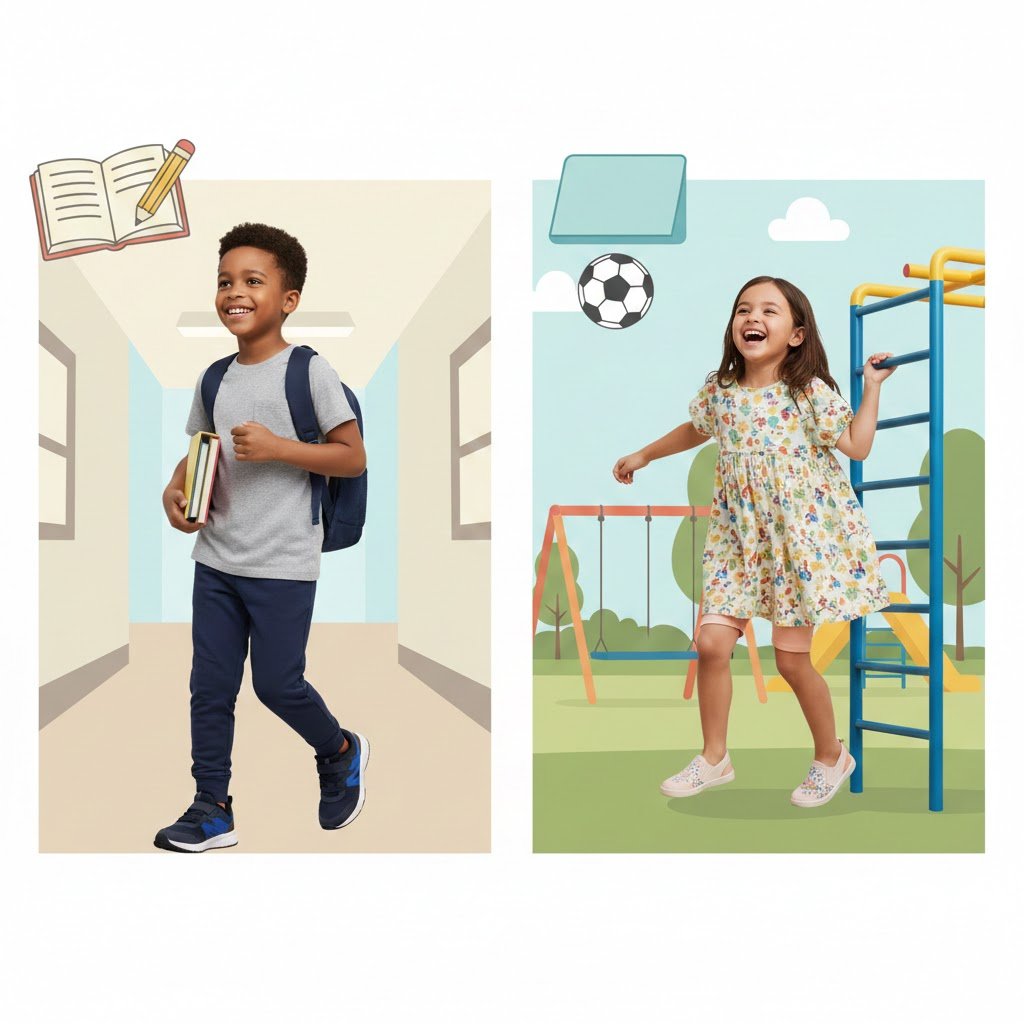
Category : Kids’ Wear
Making decisions on appropriate clothing to be used by children may be a tricky issue, particularly in terms of style, comfort and functionality. Children require the type of clothes that enable them to move, play, and feel good during the day. This guide will assist you in the world of wear in kids wear that will guide you on how to dress comfortably on to school and play.
Realizing how Comfort is important
The most important thing is comfort in the clothing of kids. Children are active people and they require clothes that will not limit them. Their school work may be distraught as a result of uncomfortable clothes and they may not have fun during their play time. These are the main reasons why you should be comfortable:
Increased Attention: Bright clothing enables children to be able to focus on what they are doing either at school or when playing. They are not as far as they can learn and have fun, when they are not fidgeting with their clothes.
Promotion of Movement: Children tend to move around, run, climb, and investigate. Cosy wear promotes this instinctive action and permits this liberty of motion.
Development of Confidence: The children feel good in their clothes and this is emulated in their confidence. Fashionable clothes enable them to show their personality without being confined.
Key Features to Look For
Choosing clothes of kids, it is better to take into account the following characteristics to be sure that they will be comfortable and helpful:
1. Fabric Choice
The soft, breathable materials to use include cotton, bamboo, or jersey. These fabrics are skin-friendly and can be ventilated in accordance with keeping children cool in the process of active play. It should not be worn with clothes that irritate the skin like heavy polyester or coarse fabrics.
2. Fit and Size
Wear clothes that fit in the right way. Tight clothes may limit movement whereas loose garments may result in such accidents as tripping. Search lean towards stretchable fittings and adjustable waist bands that are flexible. When shopping, you should look at purchasing a size larger than you too since it is guaranteed to be used up, yet the clothing should not be too loose.
3. Easy to Wear
Children, particularly the younger ones, might have a problem with complicated zippers, buttons, or other fasteners. Use jeans, fabric pants, or clothes that have elastic waistlines, pull-on styles, or easy buttons. This brings out independence and it is easy to dress both the children and parents.
4. Durability
Children are rough on their garments, thus, they should use tough materials that will not be worn out. The garments are reinforced at seams, stitched well, and dyed fabrics, making the clothes to be able to withstand throughout the school year and even beyond.
5. Versatility
Choose multi-purpose dresses that can be used on various events. As an example, a plain cotton t-shirt can be worn with shorts to play or worn with a skirt to go to school. The outfits can also be made more versatile by layering them with jackets or light cardigans.
Seasonal Considerations
Dressing requirements of children can vary according to seasons. The following are the tips in each season:
Spring and Summer
Lightweight and Breathable: Select lightweight materials that will keep the children cool during hot seasons. They include shorts, t-shirts and sundresses.
Sun Protection: If it is sunny, think about getting tops that have inbuilt UV protections or light long sleeve tops. Forgetting hats and sunglasses is prohibited.
Fall and Winter
Layering Essentials: It is essential to layer during cooler weather. Invest in long sleeve shirts, lightweight sweaters and jackets which can be added and removed easily.
Cozy Clothing: Select such items as fleece or wool, which is not too thick. Search insulated jackets and thermal clothing when the weather changes to the colder days.
Fashionable but comfortable Choices
Comfort does not necessarily imply the compromise of style. Numerous brands are also targeted at developing stylish children’s clothes that are more functional. Listed below are some of the fashionable alternatives:
Athletic Wear: Nike and Adidas are brands of stylish and comfortable clothes that are ideal in school and at the field. Search moisture-wicking clothes and breathable patterns.
Casual Chic: Fashionable but comfortable clothes are offered in such brands as Gap Kids or H&M. Find fancy leggings, jogging pants and graphic t-shirts that children will enjoy.
Green Alternatives: There are a lot of eco-friendly brands that produce organically made clothing. They are not only comfortable, but also make the planet healthier.
Engaging Your Child in the Process
You can also enroll your child in the process of choosing clothes and this might result in improved decisions and satisfaction. Here’s how to make it fun:
Let Them Choose: Give your child the choice of the favorite colors and styles. This assists them in cultivating their taste in fashion and they are assured that they are making the right choice with their clothes.
Make a Fashion Show: Turn the process of putting on clothes into some form of a fashion show. This will assist them in viewing the fit and the feel of the clothes and therefore, it is easier to establish the level of comfort.
Conclusion
It does not necessarily mean that one has to be inundated with choosing comfortable kids to wear to school and play. With the correct fabrics, fit and features you are able to build a wardrobe that will ensure your child is seen as in style and also to feel as good. Always remember to bear in mind seasonal requirements and engage your child in the activity to make sure he or she would love to wear what he or she wears. These tips can transform their wardrobe to a more comfortable, practical and stylish one.
FAQs
1. Which materials are the most suitable in clothing for kids?
Cotton and bamboo should be used in the clothing of kids because these are soft and breathable fabrics. They are comfortable and allow ventilation and freedom of movement in case of play and school work.
2. What can I do to be sure that I choose the right fit of my child?
Wear clothing that can accommodate growth without being too baggy. Find clothes that have adjustable waistlines and fabrics that are stretchy to allow flexibility and comfort.
3. What is my dressing code when taking my child during various seasons?
During the warmer seasons, lightweight and breathable clothes are preferable and in colder seasons, layers and warm fabrics such as fleece should be used. Look after the sun when it is hot.
